Is code review dead?
Table of Contents
Nello as a Gym
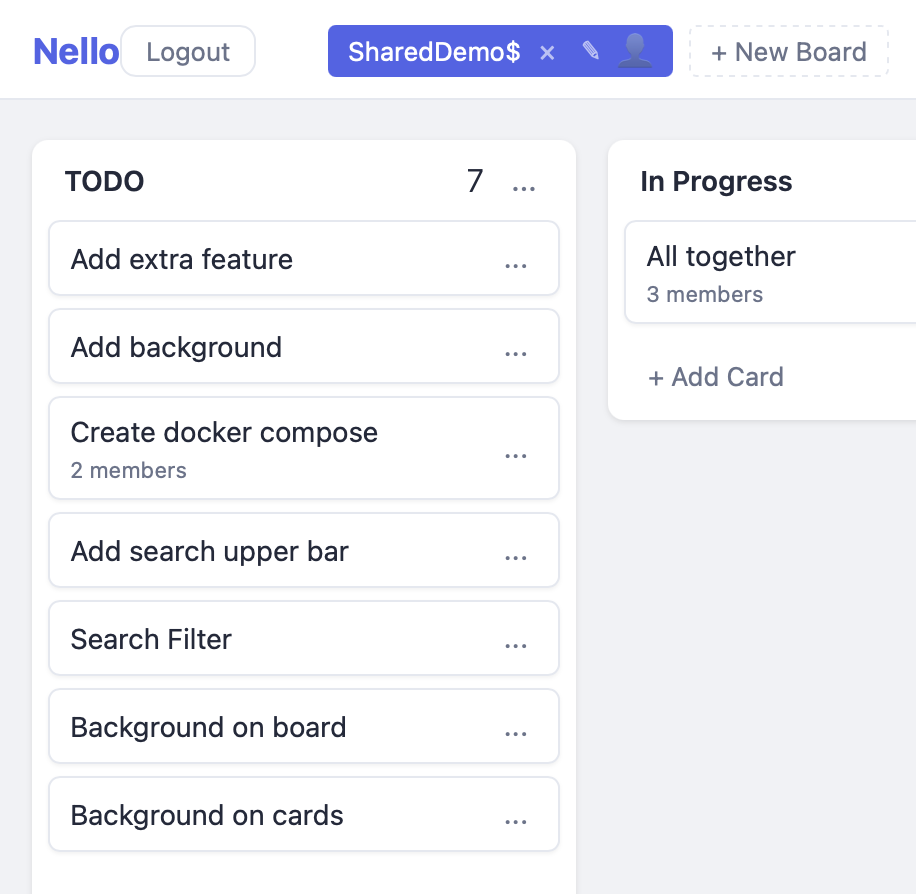
After working on a toy project for a while, called Nello, a Kanban board, via AI coding I want to share with you my experience.
In the meantime I read Antirez’s Control the ideas, not the code too, which I find very interesting.
Nello is the first project I designed “AI upfront”: I wrote more or less 0 code, I sometimes created some SQL tables, but mostly of the time I just reviewed the spec, and tested the produced artifacts as a “end user”.
I stopped to do code review on regular basis for Nello, because it IS a waste of time, if you want to design a Minimum Viable Product (MVP).
I believe many programmers at this point have less impact they could have because they look at the code. I truly believe into that.
I completely agree. Sometimes I changed the code of the “machine” but it was a bit pointless: I do it for architecture preferences, or because I know what I will do next so I want that critical piece of code was written in a specific way.
The issues I have with AI is mostly because the “machine” started to do things on area without a clean specification, which by the way happen all the time on “pure human teams” too.
I have some other insights:
- Bad code was written before AI took place. I have seen storm of young consultants writing horrible code, being me one of them too, in the first year of my job. I teach to them how to write good code, sometimes I rewrote entire crazy algorithms to just be able to understand them. So do not complain for bad AI code if you are a software consultant. Never.
- In the last 12 months frontier models got better to add code to already automated code base.
- QUALITY ASSURANCE (QA) is the key to our new role as software engineer or software architect.
What I do when I use AI:
- I write a specification with open-spec. If possible I design the data model upfront, to have a stronger grip.
- If needed I carefully design the architecture (I review the proposed architecture)
- I read the proposal, design and tasks produced. Sometimes I add some tasks.
- I ask to produce the code
- I test the software, review the SQL produced and test the outcome
- If I detect some bugs, I kick in a stronger model if needed.
As said by Antirez:
You have to understand how things work, what is the best design, how to reach a certain level of performance.
If you have wrote code in the last 30 years (!) like me, it is easy to understand this sentence. It is far more difficult if you get out of an Italian University with just 3/4 practical coding exams on your curricula (on year 2000 it was the norm, now I hope they do a bit more but I do not think so)
I was able to create an AGENTS.md for my toy project to set the code style I want, which is simple: less code, more fun.
The challenge now is:
- Design your ideas
- Break them in user stories (workable items)
- Compare competing solution for the same requirement and choose the best one (this can take a lot of time)
- Do strong Quality Assurance for your code. Frontend needs a lot of attention if you care your Customers.
- Find a balance between AI costs. Frontier model costs a lot, have you noticed?
An example is worth of 1000 words (or more)
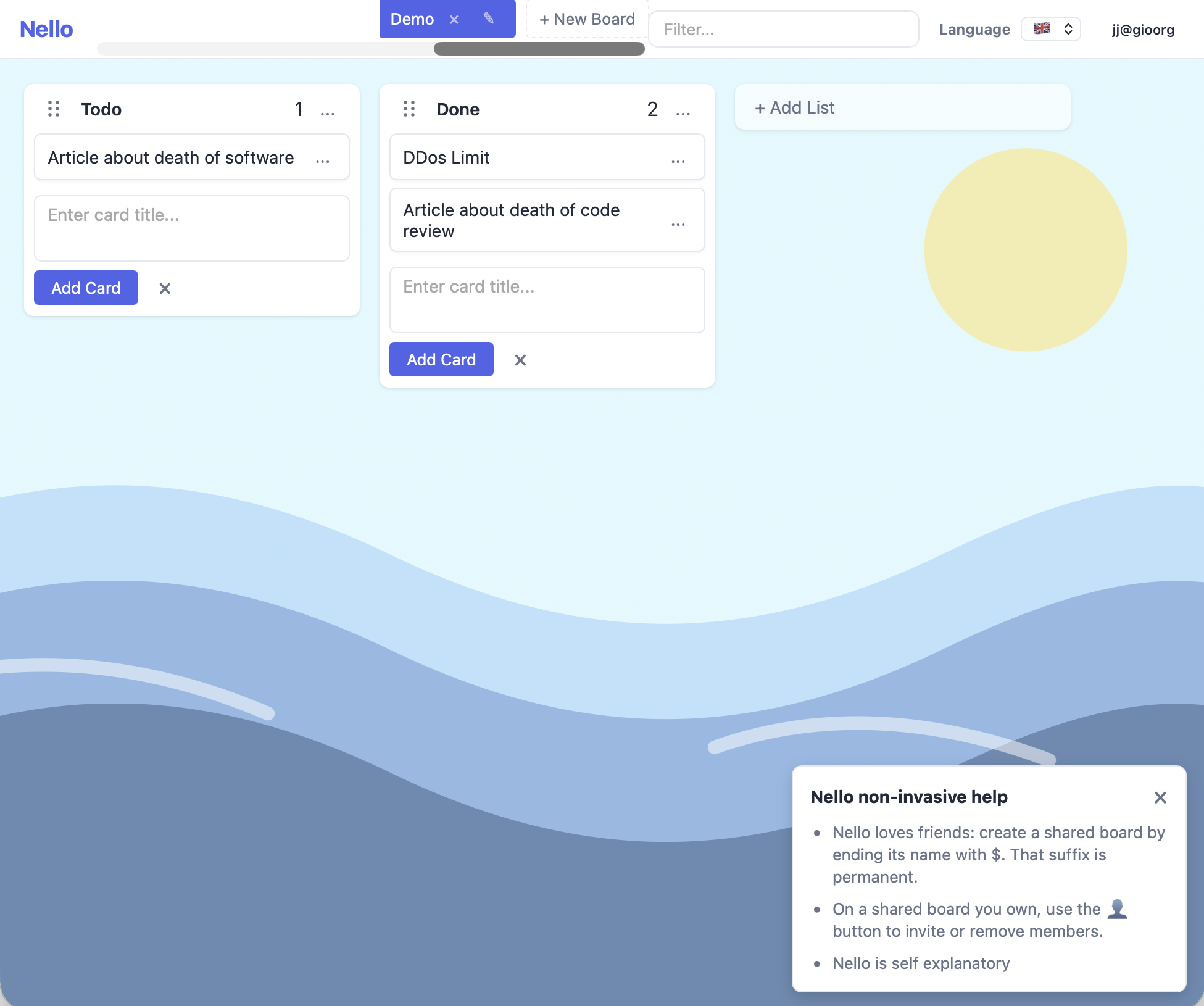
When I designed Nello I take Trello as an example. I look at the interface, and I take a look also at the export format, which was plenty of interesting things like “limits” for every entity. When you design a product there are a lot of cross requirements you need to take into account. They should be tailored by your product, but more or less are the same like:
- You need a registration procedure for an open-beta, with minimal security
- You need to classify user per tier, and provide limits to them.
- You need some minimal audit logs, to track down illegal use/attack trails
- You need to design the deployment to ensure:
- Software will not eat all your resources
- A DDoS (distributed-denial-of-service attack) will not block the system
All this things require a design to be carried out, and a Human is often needed to steer the direction of the software design, BUT implementation can be pattern-matched by an AI coding agent because it is very easy to do.
I lost the code review but I received in return a bit of free time to focus on more product-owner oriented stuff, like
- Shared board design
- A client-side search functionality: it is always needed if you are going to do non-trivial stuff (see “Filter” box above the image)
- Ability to add card and board backgrounds (true catcher)
- Essential stuff like
- Password change functionality
- Multi-language support
- User details These ’essential’ stuff are very boring to do, but needed.
Are you ready?

I suggest to start using AI for coding, even cheap models like DeepSeek or ChatGPT Terra can give you plenty of support for simple tasks.
On the other end, we all need to process grief for the lost of coding (processare il lutto per la perdita del coding, in Italian), at least for a bit of time. Coding can rise again, maybe in the future maybe this Autumn at Halloween… who knows?